For many people, getting fit can feel tied to going to the gym. While the equipment, classes and structure that a gym membership offers can be helpful, they are not the only path to better health. In fact, convenience often matters more than access to the perfect facility.
If getting to the gym requires a long commute or extra planning, even the best membership may go unused. “Unless a gym is within 15 minutes of your house, the likelihood of your actually using the gym is very, very low,” says Kaleb Baun, a certified health coach with Memorial Hermann’s Employee Wellness.
Of course, this does not mean a gym membership cannot be valuable. But Baun says it is important to recognize that having access to equipment does not automatically mean a person will create and hold to a consistent routine. “It could be the greatest gym in the world, with the best people and most modern amenities you can imagine,” he says. “But if it's an hour away, you're just not going to use that gym regularly.”
The good news is that fitness does not have to be complicated, expensive or tied to one location. With a plan and a little creativity, you can build movement into a day at home, a favorite outdoor space or the activities you already enjoy.
Schedule Your Workouts Like Any Other Appointment
One of the biggest barriers to exercise is not equipment, motivation or even fitness level. It is finding the time.
Many people assume they will work out when they have a free hour in their day, but Baun says that approach rarely works. Between work, family responsibilities and daily obligations, most people do not simply stumble across extra time. “People who consistently schedule gym time are the ones who successfully complete workouts,” Baun says. “I have bad news for you if you think that you’re going to work out when you have time or when you’re free: There’s never free time in your day.”
Instead of waiting for the perfect opportunity, Baun recommends treating exercise like any other important appointment. Blocking time on a calendar makes it far more likely that your workouts will happen. And the good news? Getting started does not require daily workouts. For many people, two or three scheduled exercise sessions each week can help build momentum and create a more consistent routine.
The Centers for Disease Control and Prevention recommends adults get at least 150 minutes of moderate-intensity physical activity each week, along with muscle-strengthening activities at least two days each week. That goal can sound intimidating at first, but the time can be broken into smaller, more manageable sessions throughout the week.
Have a Plan Before You Start
Once you’ve carved out the time, the next step is deciding exactly what you’re going to do.
One challenge with home workouts is that they can feel less structured than going to a gym. Without a plan, it is easy to wander through a few exercises, lose focus or skip the workout altogether. “The temptation at home is to just do whatever you’re feeling that day,” Baun says. “But you must have a plan and organize your workout just like you’d do at the gym. It’s important to know which exercises you’re going to do, the number of sets and the number of reps in each set.”
This also means scheduling walks or runs on certain days and setting aside other days for strength training. The key thing here is that you must have a plan.
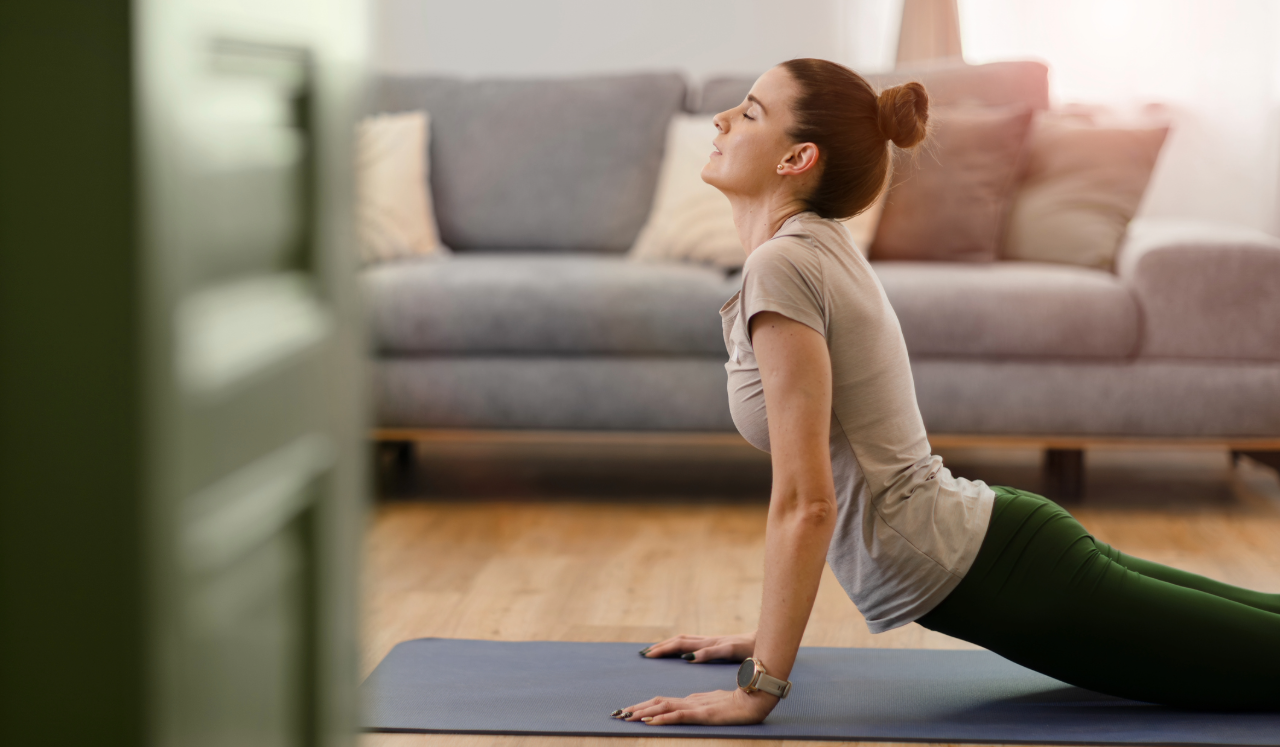
Furthermore, the workout itself does not have to be complicated. Resistance bands, a yoga mat and a small amount of space can be an effective home workout setup. Even those tools are optional, according to Baun. “You can do bodyweight exercises,” he says. “You can do things like push-ups, lunges, squats or other activities with just your body weight.”
Whatever activity you choose, Baun says the key is to have a plan before you begin to make it easier to stay consistent over time.
Turn Activities You Enjoy Into Exercise
Not every workout has to feel like a workout.
Baun encourages people to think about activities they already enjoy and look for ways to make them part of their fitness routine. For some people, that might mean biking, hiking, kayaking or paddleboarding. For others, it may be gardening, golf without a cart, tennis, pickleball or another recreational sport.
The goal is to find activities that get you moving that also feel enjoyable enough to repeat. “Activities that are a lot of fun often can often be treated as a true workout,” Baun says of hobbies and sports that people like to play that increase movement and raise the heart rate. “You may not think it, but active gardening is also a very good workout,” he says. “Digging all those holes and moving dirt heaps are good ways to get your heart rate up.”
Recreational sports can also be a great way to stay active, especially when they add a social element. Tennis, pickleball, basketball and golf can all help people move more, but Baun cautions against the “weekend warrior” approach. Jumping into intense activity once a week without moving much the rest of the week can increase the risk of injury.
If you are starting a new sport or returning to one after a long break, begin gradually. Build endurance, warm up properly and give your body time to adjust to the cutting, turning and quick movements that many recreational sports require. To add movement to your week, you may consider adding drills to better prepare your body for the change in activity.
Use Movement as Transportation
Exercise does not have to happen only during a dedicated workout session, either. Some of the most sustainable habits come from building movement into things you already do.
“Biking and walking, specifically, are not just activities we do for exercise—they are activities we can use as transportation as well,” Baun says.
For some people, that might mean biking to work or walking for nearby errands. For others, especially in areas where commuting by bike or foot is not practical, it may mean finding smaller ways to add movement to the day. Simple options include:
- Parking farther from the entrance
- Taking the stairs instead of the elevator
- Walking during phone calls
- Getting off public transportation one stop early
- Taking a short walk before or after lunch
These changes may feel small, but they can help shift your mindset from exercise as a separate task to movement as part of your daily life. Over time, those small choices add up.
Take Microbreaks Throughout the Day
Many people think exercise needs to happen all at once, usually in a 30-minute or hour-long block. But for busy people, that mindset can make it feel harder to fit physical activity into their day.
Instead, Baun encourages people to think about smaller movement breaks throughout the day, or “exercise snacks.” These short bursts can include squats, lunges, push-ups, stretching or a brisk walk around the office or neighborhood. “If you have several five-minute, mini-activity sessions throughout your day, they end up accumulating throughout the day and make it a lot easier to meet your movement goals rather than having to invest that full hour at the end of the day,” he says.
For someone working a desk job, a microbreak might mean doing squats between meetings, walking during a short break or stretching after a long period of sitting. The key is not perfection; it is finding realistic moments to move more often.
Why Getting Outside Can Help
Moving outdoors can offer benefits beyond the activity itself. Sunlight helps the body produce vitamin D, which plays an important role in bone health and muscle function. Natural light can also help regulate the body’s circadian rhythm, which influences a person’s sleep and wake cycles.
For Baun, outdoor activity also offers something a treadmill cannot: natural variety. Uneven sidewalks, trails and outdoor surfaces require your body to adjust as you move, which can help support balance and stability. “If you've ever walked outside in Houston, you know that the sidewalks are not even,” he says. “In addition to getting your steps in, you're actually challenging your body’s balance and adaptability.”
That may not seem important at first, but balance and stability become more critical with age. Practicing those skills through walking, hiking and other outdoor activities may help reduce injury risk over time. “Getting outdoors and walking on uneven surfaces is a great practice for stability and balance,” Baun says.
In Houston, heat and humidity can make outdoor activity challenging, especially during the summer. On warmer days, opt to exercise earlier in the morning or later in the evening, drink plenty of water and listen to your body. When the weather is more comfortable, Baun says it is worth taking advantage of the opportunity to get outside.
Fitness Starts with a Plan
You do not need a gym membership, expensive equipment or a perfect schedule to be active. What you do need is intention. “The biggest takeaway is that fitness is available to everybody,” Baun says. “You don’t need special equipment, but you do need a plan.”
That plan might include walks around your neighborhood, bodyweight exercises at home, gardening, recreational sports, microbreaks during the workday or simply taking the stairs more often. The best approach is the one that fits your life well enough that you keep doing it.