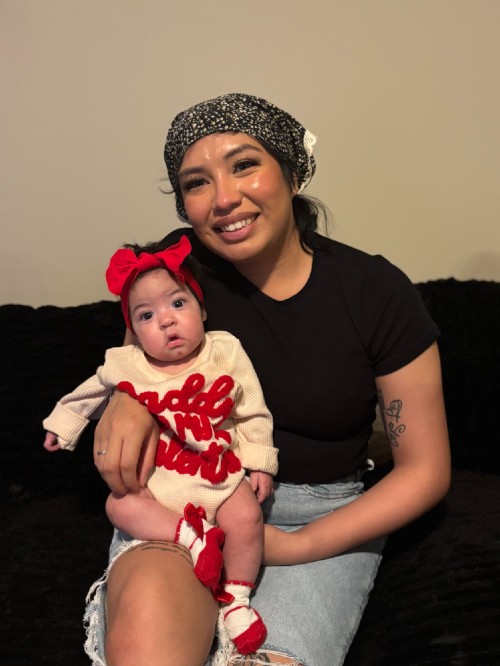
 After a life-threatening stroke while eight weeks pregnant, Yvette worked to regain her independence at TIRR Memorial Hermann while navigating a high-risk pregnancy, premature delivery and specialized NICU care for her daughter at Children’s Memorial Hermann Hospital.
Yvette Molina was only 25 years old when a healthy pregnancy suddenly became a medical emergency that threatened both her life and the life of her unborn daughter.
Today, at 27, she is on the road to good health, caring for her daughter Graciela, continuing her rehabilitation and celebrating milestones that once seemed impossible. "It gets better every day," Yvette said. "I'm taking care of my baby, driving again and continuing therapy. Looking back, I realize how far I've come."
Following emergency brain surgery to treat the cause of her stroke, Yvette began the next phase of her recovery at TIRR Memorial Hermann in Houston, Texas, where rehabilitation specialists helped her work toward regaining her independence while still pregnant. As her pregnancy progressed, her care expanded to Children’s Memorial Hermann Hospital, where specialists managed her high-risk pregnancy and premature delivery, while her daughter, Graciela, received specialized NICU care.
When Pregnancy Symptoms First Signaled Something More Serious
Yvette went to work one morning but started to experience severe nausea and vomiting. At first, she just thought she was experiencing awful morning sickness.
But the symptoms continued to the point where she went to urgent care for treatment.
But nothing kept the symptoms at bay. In fact, Yvette said, things got worse. On one particular evening, she remembers coming home from work and going straight to bed because she felt so bad.
Everything that happened after that is now a mystery to Yvette. She remembers nothing that happened that night nor the next several days.
That night her boyfriend noticed she appeared to be having a seizure. He acted quickly by calling 911. Yvette was taken to a local hospital in Pasadena, Texas, close to her home. While in the emergency room, Yvette had a second seizure.
That’s when a neurologist ordered brain imaging. The scans revealed a large mass on the left side of her brain, requiring an emergency craniotomy, a procedure in which part of the skull is temporarily removed so surgeons can safely reach the brain. The procedure relieved pressure on her brain and allowed doctors to treat the underlying problem.
Yvette remembers none of it.
When she woke up in her hospital room, nearly 24 hours had passed. "I thought someone had died because my whole family was standing around me," she recalled. "I didn't know what had happened."
She struggled to walk. She needed a walker for support. Looking in a mirror, she saw her head wrapped in bandages and realized her hair had been shaved for surgery.
"I kept thinking maybe I had been in a car crash or fallen. Nobody wanted to tell me everything right away,” Yvette said. “It was so frustrating. But I was told my baby was okay, so I just followed instructions."
Doctors later explained she had experienced a stroke. "I couldn't believe it," she said. "I was only 25. How could I have had a stroke?"
Intensive Stroke Rehabilitation Begins at TIRR Memorial Hermann
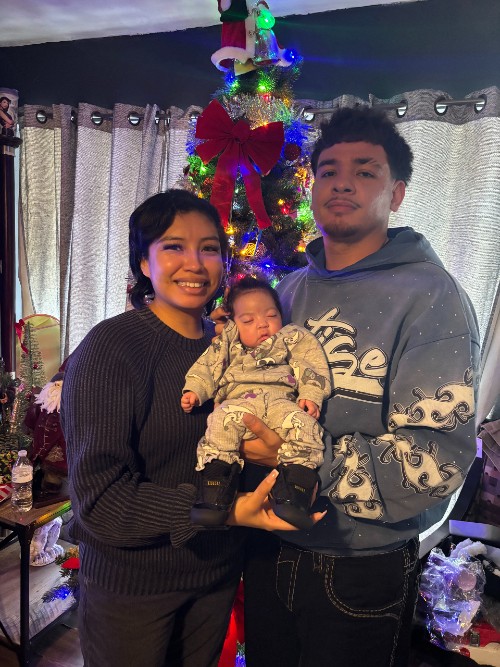
In late May, after recovering from the emergency surgery, Yvette’s next stage of care brought her to TIRR Memorial Hermann to begin intensive inpatient rehabilitation.
Initially, she wondered why she needed rehabilitation at all. "I wasn’t even aware of all the effects of the stroke," she said. "I needed to learn to walk and talk well again. It was really scary when I realized that, but I knew TIRR Memorial Hermann was a great place for rehabilitation."
TIRR Memorial Hermann has been recognized among the nation’s leading rehabilitation hospitals for decades. In the 2026–2027 U.S. News & World Report “Best Rehabilitation Hospitals” rankings, TIRR Memorial Hermann is ranked No. 1 in Texas.
Yvette’s rehabilitation physician, Christopher Falco, MD, an associate professor of Physical Medicine and Rehabilitation at McGovern Medical School at UTHealth Houston and a physical medicine and rehabilitation specialist affiliated with TIRR Memorial Hermann, oversaw her rehabilitation, which focused on addressing the physical, functional and communication challenges she experienced after her stroke.
“After a stroke, rehabilitation needs to be highly individualized because every patient is affected differently,” said Dr. Falco. “For Yvette, our plan focused on rebuilding her strength, balance and endurance while also addressing the communication and cognitive challenges caused by her stroke. Through physical, occupational and speech therapy, our goal was to help her regain the skills and confidence she needed to become as independent as possible and return to the life that was important to her, including preparing to care for her baby.”
"I told him I was worried that I wasn't speaking correctly," Yvette said. "He told me he was going to help me. He was very supportive and comforting."
Yvette’s pregnancy added another layer of complexity to her stroke rehabilitation, particularly when it came to medication management. Dr. Falco explained that patients who have experienced a stroke often require multiple medications to maintain medical stability, and certain medications may also help facilitate stroke recovery. In Yvette’s case, however, the potential risks to her pregnancy limited the medications that could be used.
“We had to be exceptionally cautious and thoughtful with her medication management,” Dr. Falco said.
Despite those limitations, Yvette remained medically stable throughout her inpatient rehabilitation stay and continued to make excellent progress in her recovery.
Her rehabilitation schedule quickly became more demanding. Every morning began with physical therapy, which focuses on rebuilding strength, balance, endurance and walking ability.
Afternoons included occupational therapy, which helped Yvette relearn everyday activities such as dressing, bathing, cooking and caring for herself independently.
Speech therapy addressed the language and thinking challenges caused by her stroke. Speech-language pathologists help patients improve her communication, memory, attention and problem-solving skills affected by her brain injury.
Some days included a fourth therapy session, giving Yvette additional physical, occupational or speech therapy beyond the minimum three hours of therapy she received each day. "I was exhausted," Yvette said. "I'd be walking stairs, walking backward while talking, using the treadmill with weights. [My therapy team] kept pushing me."
Her progress surprised everyone.
Doctors initially believed she might need a longer therapy stay. Instead, after just two and a half weeks, she was walking independently. "They told me they were shocked by how quickly I recovered," she said. "I didn't realize how much progress I had made until it was time to leave."
Continuing Stroke Recovery with Outpatient Rehabilitation
Returning home brought new challenges. Yvette continued to have occasional difficulty finding the right words. Sometimes similar-sounding words would come out instead of the ones she intended to say.
She also continued rebuilding her strength and endurance. She began outpatient physical therapy at Memorial Hermann Sports Medicine & Rehabilitation in Webster before receiving outpatient speech therapy several weeks later at TIRR Memorial Hermann.
In October, surgeons performed a second operation to replace the portion of her skull that had been removed during her craniotomy. This procedure restores the skull's normal shape while protecting the brain.
Meanwhile through all of this, she was focused on having a healthy baby. She hoped to complete her surgery and rehab before her daughter was born. "I wanted to be the one taking care of my baby," she said.
A Second Medical Emergency During Yvette’s Pregnancy
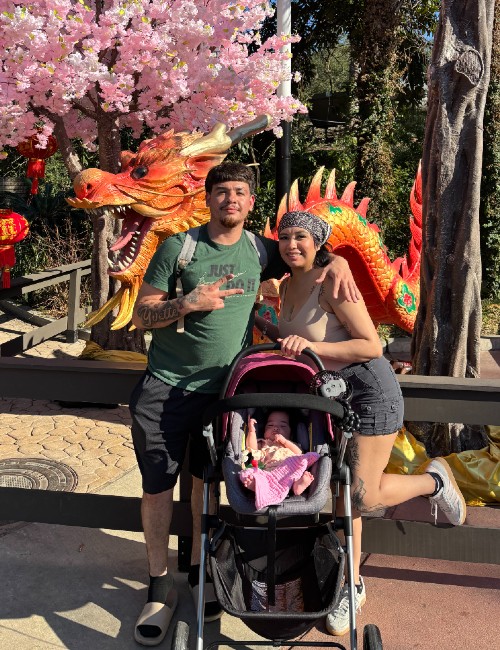 Just as Yvette continued making progress during her stroke recovery, an emergency developed related to her pregnancy. At nearly 26 weeks of pregnancy, she woke up bleeding. She immediately contacted her obstetrician, who instructed her to go to Children’s Memorial Hermann Hospital in the Texas Medical Center.
Doctors discovered she was already dilating and that her placenta had separated prematurely from the uterus, a serious complication known as placental abruption, that can reduce the baby's oxygen supply and place both mother and baby at risk.
Despite efforts to slow labor, contractions continued to intensify.
Doctors performed an emergency Cesarean section (C-section) and, on Aug. 31, 2025, baby Graciela entered the world weighing just one pound.
Specialized NICU Care Helps Graciela Thrive
Baby Graciela was immediately admitted to the hospital’s Neonatal Intensive Care Unit (NICU), where highly specialized teams care for babies born prematurely or with serious medical conditions. Because her lungs were still developing, Graciela required several forms of breathing support.
Doctors also monitored bleeding in her brain, known as intraventricular hemorrhage, a complication that can occur in extremely premature infants because fragile blood vessels are still developing. Additionally, Graciela had a small hole in her heart and was treated for thyroid-related issues.
Fortunately, many of those conditions gradually resolved as she matured.
Throughout her daughter's NICU stay, Yvette balanced daily hospital visits with her own rehabilitation appointments. And, after more than three months of specialized care in the NICU, Graciela went home on Dec. 6, her original due date. She weighed four pounds!
Mother and Daughter Celebrate Milestones Together
Today, both mother and daughter continue reaching new milestones.
Graciela smiles, babbles to get everyone's attention, enjoys tummy time, rolls over, sits independently and is beginning to scoot across the floor.
Yvette continues improving through outpatient rehabilitation while embracing the role she fought so hard to have.
Yvette is driving again, taking Graciela to therapy appointments and routine checkups while continuing her own recovery.
Looking back, she remains grateful for the physicians, therapists and nurses who cared for both her and her daughter. Today, Yvette's focus is no longer on what she lost. It's on everything she and Graciela have gained together.
Across Memorial Hermann Health System, Yvette and Graciela received specialized care in rehabilitation medicine, maternal-fetal medicine, neonatal intensive care and outpatient rehabilitation, helping both mother and daughter continue moving forward in their recoveries.
Learn more about rehabilitation services at TIRR Memorial Hermann»
Learn more about specialized NICU care at Children’s Memorial Hermann Hospital»