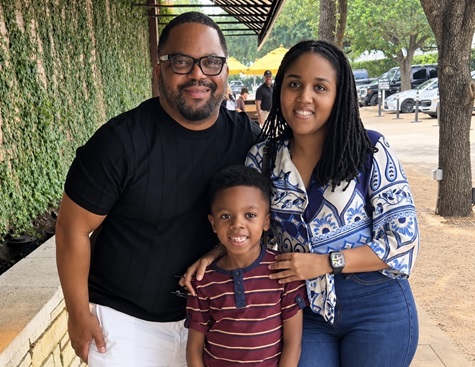
 Nicket Hamilton came to Houston in July 2025 for a fresh start. The resident of Katy had finished nursing school in South Florida on the heels of losing her husband to kidney cancer. She wanted to give herself and her then 6-year-old son Declan a renewed outlook for their future.
Hamilton, pursuing her bachelor’s degree in nursing, settled into her new home while studying for a national nursing license and job hunting. A month after moving to Houston, she felt a lump in her right breast while in the shower.
“Having just moved here and not having a job, I didn’t have insurance,” the now 41-year-old recalls. “I went to a nonprofit clinic that referred me for a mammogram.”
While the mammogram seemed to indicate that the lump she felt was likely benign, Hamilton remembers that result didn’t sit well with her, so she pushed for a biopsy in November. The biopsy revealed she had ductal carcinoma in situ, or DCIS, an early-stage breast cancer.
Hamilton kicked into what she calls “fix-it mode,” and while she had qualified for Medicaid under a special program for breast cancer patients, she knew she would eventually need insurance to cover the cost of her treatment. She purchased insurance through the Healthcare Marketplace, but it wouldn’t become effective until February 2026. In the meantime, she met with a medical oncologist and surgeon to figure out next steps. “I was told by that team that because the cancer was contained, the earliest I would get my surgery was in March,” she says.
She also had reservations about the reconstruction options they were providing. “I just didn’t feel my care was being prioritized with them, so I decided to do my own research and piece together my team,” she remembers.
That research led her to Iman Doostan, MD, PhD, a medical oncologist from McGovern Medical School at UTHealth Houston, who is affiliated with Memorial Hermann Cancer Center – Texas Medical Center, and Tarek Zaghloul, MD, PhD, assistant professor of breast surgical oncology at UTHealth Houston and a surgeon, specializing in breast disease, also affiliated with Memorial Hermann-TMC. “With the help of the nurse navigator at Memorial Hermann, I got an appointment the same day and met with Dr. Doostan and Dr. ‘Z’ at the same time,” she recalls.
Also present at her initial appointment was a team member of Klara Sputova, MD, a plastic surgeon from UTHealth Houston, also affiliated with Memorial Hermann, whom Hamilton later chose as the surgeon to handle her breast reconstruction. “I was overwhelmed with gratitude for having this entire team focused on my care. I could trust them. They took time to listen, and I didn’t feel like a number.”
To develop a treatment plan, the team set up an appointment for Hamilton to have a breast MRI, along with a blood test, to determine if there was a genetic component to her development of cancer. They also presented her case at the biweekly conference, or Tumor Board, held by Memorial Hermann and UTHealth Houston, in which doctors from multiple specialties discuss personalized treatment plans for breast cancer patients based on international guidelines, most recent clinical studies and advances in breast cancer.
 “My doctors told me the cancer was close to the margins recommended for removal, and Dr. Z drew it out on paper for my fiancé Marvin and me,” Hamilton remembers. Dr. Zaghloul wanted to help them understand the cancer’s extent, as shown by the mammogram, and the planned procedure. “With input from Dr. Doostan and Dr. Sputova, we decided a double mastectomy with reconstruction would be the best option,” Hamilton says.
“With DCIS, we have several treatment options that have been shown to be beneficial, but we have to make the decision together,” Dr. Zaghloul explains.
The doctors, along with Hamilton and her fiancé, discussed the possibility that the cancer, once removed and examined by a pathologist, may turn out to be invasive.
During her surgery at Memorial Hermann-TMC in February 2026, before he removed her breast tissue, Dr. Zaghloul injected Hamilton’s breast with a dye designed to be detected for up to 28 days in the lymph nodes that would be the first to show signs of cancer spread beyond her breast tissue. Also, during her surgery, Hamilton’s breast tissue under the nipple was tested immediately by a pathologist to see if she could have the type of mastectomy that would allow her to keep her nipples.
Armed with the pathologist’s findings that her skin and nipples were free of cancer, Dr. Zaghloul removed her breast tissue, leaving her skin and nipples intact. Dr. Sputova, also in the operating room, then placed tissue expanders and further prepared her skin for later reconstruction of her breasts from fat taken from her own abdomen.
As was a possibility that Dr. Zaghloul had explained to Hamilton prior to her surgery, the pathology report following her surgery showed that the three tumors, each less than 3 millimeters in size, were invasive. The Tumor Board and Dr. Zaghloul all agreed that her lymph nodes, which were marked by the dye he had injected during her surgery, should be tested for any further spread.
“As I was healing well from my initial surgery, Dr. Z scheduled my lymph node biopsy two weeks after my surgery to determine if my lymph nodes showed any cancer cells,” Hamilton says. “They were negative for cancer!”
That meant she also could avoid radiation treatment and chemotherapy.
Dr. Zaghloul says Hamilton will be followed closely over the next several years. Because she has no breast tissue, regular mammograms and ultrasounds are not necessary. She will, however, have exams every three months for him to look at her skin and check for any changes or masses. She will also have blood tests, called ctDNA, to check for circulating tumor DNA that can detect cancer six months earlier than would be seen on imaging. If those blood tests come back positive at any time, Dr. Zaghloul says they will scan other parts of her body to determine if cancer is showing up anywhere else. She will also be on hormonal therapy for the next five years to help reduce her chance of a recurrence.
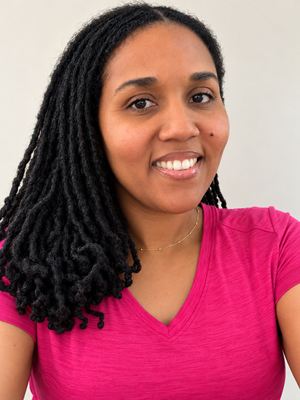 Hamilton looks back on her experience with gratitude to her team of doctors and for the way she was treated. “I never felt like a patient,” she says. “Dr. Doostan took the time to support me as a person—not just a patient—and guide me through the process. Dr. Sputova and her entire team have also made me feel incredibly supported and cared for. They made me a priority and catered to my every need.”
She is looking forward to finishing her bachelor’s degree in nursing in May 2027, traveling, getting married, living the best version of her life and growing old to be a grandmother to Declan’s future children. “Dr. Z is an inspiration to me,” she says. “I call him my ‘Heaven-sent’ doctor. I would love to become an oncology nurse after I earn my degree to give back.”
She also says she shares her story to help others who face a health crisis. “If something feels off, get it checked out,” she advises. “Don’t settle, and advocate for yourself. Have faith over fear and trust in God.”