
Over 30 million people suffer from Sleep Apnea. In this episode, we’re joined by Kevin Gaffney, Neurologist and Sleep Medicine Specialist at Mischer Neuroscience Associates, who discusses the long-term effects of sleep apnea and how a sleep study can help in the diagnosis of this disorder. Many of the damaging effects of sleep apnea can actually be prevented or reversed through diagnosis and appropriate treatment. The Sleep Disorders Centers at Memorial Hermann offer the services you need to get the sleep you deserve.
Scott Webb (Host): Welcome to Everyday Well®, a health and wellness podcast, brought to you by Memorial Hermann Health System. Tune in for the latest tips and information about health care topics that matter most to you.
I'm your host, Scott Webb, and today we're discussing sleep apnea, a common sleep disorder that can have long-term health consequences if left untreated.
Kevin Gaffney, Neurologist and Sleep Medicine Specialist at Mischer Neuroscience Associates shed some light on the subject. In this episode, we'll explore what sleep apnea is, who's affected, and how a sleep study can be invaluable in the diagnosis of sleep apnea, an important first step to restore your health and quality of life.
Doctor, it's a pleasure to have your time today. We're going to talk about sleep apnea and it's so common and I think so misunderstood, and I know there's been a lot of advancements, over the past few years. So, before we get to all that, let's just start here. What is sleep apnea? Break that down for us.
Dr. Kevin Gaffney, MD, FAASM: Sleep apnea refers to pauses in breathing during sleep. Most apneas are obstructive from blockage of the airway when you're relaxed and your tongue falls back in your throat. There are other types of apneas that do not involve obstruction, but these are relatively rare. Apneas, by definition cause a decrease in oxygen in the blood, which may affect the heart, brain, and many organs.
The disruption of sleep that comes along with apneas may cause excessive daytime sleepiness, frequent urination at night, acid reflux, or heartburn, and other symptoms. The risk of sleep apnea increases with higher weight, but even relatively thin people can get sleep apnea.
Host: Yeah, and, strictly speaking just from a lay person and trying to understand sleep apnea. I have many members of my family who have sleep apnea, and I think my wife is pretty sure that I have it. So maybe I'm doing a little self-diagnosis here today, but what are some of the health issues that can be caused by sleep apnea?
Dr. Kevin Gaffney: Deep sleep is necessary for healing and rest. Without deep sleep, you'll be excessively sleepy. REM or dream sleep is necessary for memory, concentration, attention and other higher brain functions. Untreated sleep apnea increases the risk of stroke, heart disease and other serious problems.
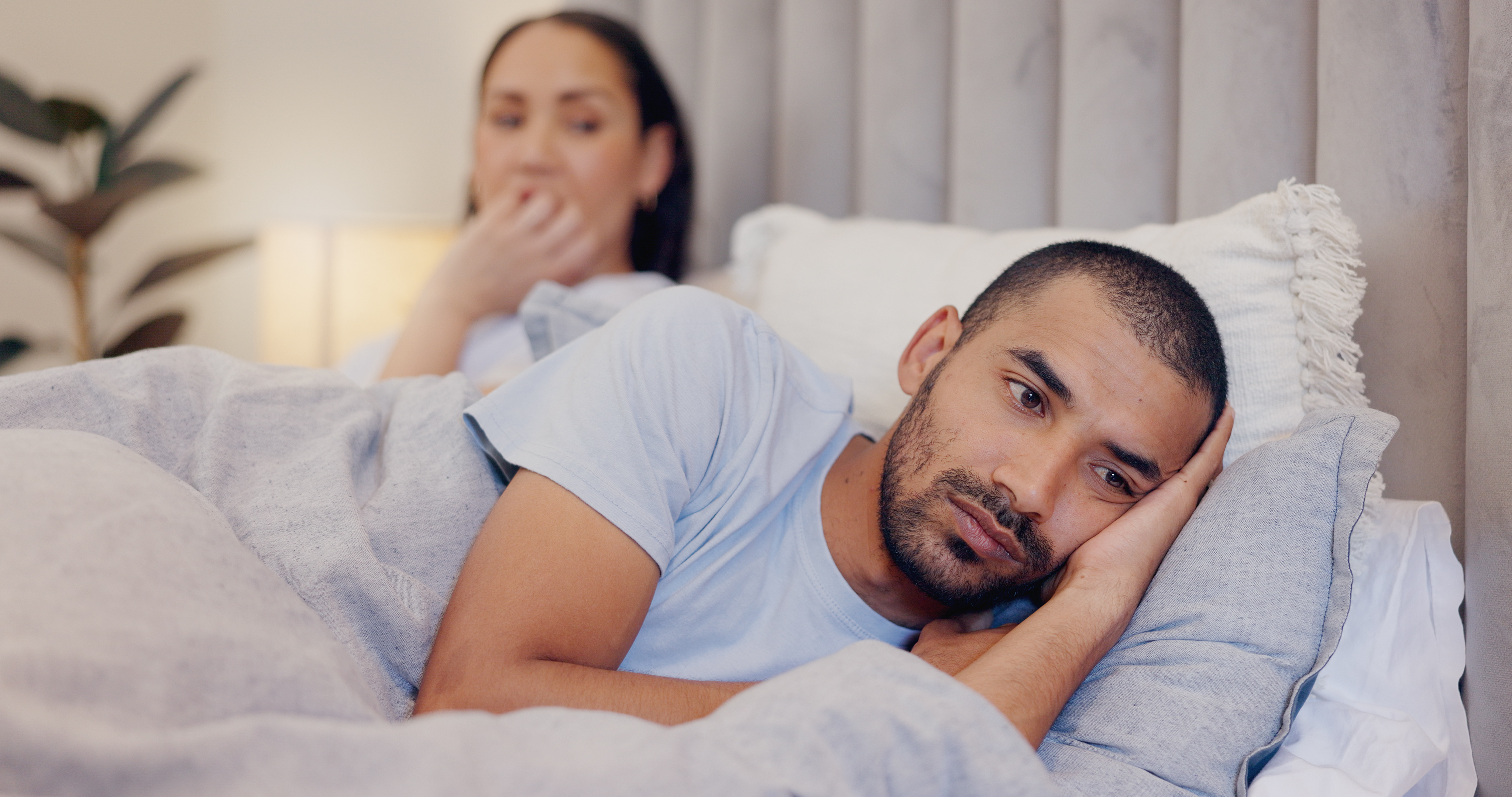
So, sleep deprivation from sleep apnea or other causes also can increase your appetite and cause weight gain. And of course, as you know, your bed partner may not get much sleep if you have a lot of snoring.
Host: Yeah, we're going to get to snoring, but I want to find out like the symptoms of sleep apnea. Is it just sleepiness? Is it fogginess? Is it a whole bunch of things that might be a sign that we've got something going on and we're not getting that good sleep?
Dr. Kevin Gaffney: Of course, snoring is common, but that does not always occur. The real hallmark of sleep apnea is excessive daytime sleepiness. If your bed partner is very perceptive, they may be able to witness apneas by watching your chest moving without air flowing coming from your mouth or nose. Other symptoms that may be an indication include gasping and choking in the middle of the night, high blood pressure, headaches in the morning, weight gain, depression, or even anxiety.
Host: Yeah. So, a whole gamut there. And you mentioned snoring there, and I'm a long-time snorer. I come from a family of snorers, if you will. Tell us about snoring and its relationship to sleep apnea.
Dr. Kevin Gaffney: Snoring is very common and it is a warning sign if it's very loud, frequent, or accompanied by other symptoms. And it's very important to talk to your health care provider about screening or testing for sleep apnea, if that's the case.
Host: I want to get a sense from you, like who's most at-risk. I don't know that family history or genetics is a part of sleep apnea. It feels like it's more behavior, lifestyle, those types of things. But who gets or who has sleep apnea?
Dr. Kevin Gaffney: Some of the more important factors are being overweight, having narrow airways or a receding jaw. And certainly, if you take sleeping pills or alcohol at night, that can be another risk factor. Sleeping pills often decrease your ability to keep your airway open at nighttime and that increases apneas. People talk a lot about nasal congestion, but that is really a minor factor that affects airflow. We won't mention age as a factor, that's another story. And also, one thing to watch is, difficulty controlling your blood pressure because that could be a sign that you may have sleep apnea.
Host: Hmm. Interesting. Yeah. And so many of these things, like folks could have high blood pressure but not have sleep apnea. But as you say, we're thinking about signs, symptoms, who's at-risk? You know, if, they're listening along here with us today, benefiting from your expertise and you're checking off things going, yes, yes, yes.
Yeah. Probably time to speak with a provider, perhaps have a sleep study, whatever it might be. And that kind of leads me to my next question, Doctor, is how do you diagnose sleep apnea?
Dr. Kevin Gaffney: Well, certainly you need that report from your bed partner and sometimes people who don't have witnessed sleep, they may find out if they go on a trip or a vacation and stay in a relative's home for the night. Your first step is to go speak to your primary care provider about your concerns. Your health care provider will speak with you and interview you about your symptoms and your medical history, perform a physical examination and potentially recommend a sleep study. Now at the Memorial Hermann Sleep Disorder Centers, we offer two ways to get a diagnosis. Depending on your specific needs, your primary care provider may suggest either a home sleep test or an overnight polysomnogram, which is conducted in the sleep lab.
Host: Okay. So, some options there, but what are the modern treatment options for folks suffering from sleep apnea?
Dr. Kevin Gaffney: The treatment does depend on your symptoms and your exact diagnosis and the severity of the sleep apnea. Your doctor will discuss, you know, the usual things about regular aerobic exercise, maintaining healthy sleep habits, limiting alcohol, quitting smoking, all that. But the gold standard for treatment of obstructive sleep apnea is still a CPAP or PAP, which refers to positive airway pressure.
Now in that case, this is a device that doesn't necessarily force air into your lungs or make you breathe. It just opens your airway up and allows you to breathe more naturally. Now there are some patients who have more trouble with a CPAP. And in that case, we do have some options which maybe are not quite as effective.
We have oral mandibular advancement devices with which look basically like mouth guards that push your jaw and your chin forward so your tongue does not fall back as easily. We have even referred people for jaw surgery, if you have a relatively small jaw. There are some medications that have come out and have been recently approved that can actually decrease apneas to some extent.
One of the things we do use is a device that is like a pacemaker and implanted in your chest. It runs wires to the nerve, to your tongue. That actually activates when you're breathing in at nighttime and then keeps your tongue pushed forward. So, it doesn't obstruct your airway and you're able to breathe at nighttime, and those can be quite effective.
There's also surgery on the soft palate and the uvula, you know, that thing that hangs down from your soft palate, but we find that that type of surgery is not terribly effective.
Host: Okay. Yeah. So, lots of options there for folks, and obviously speaking with providers like yourself, is the way to go. But from you here, Doctor, and I do appreciate your time today, just final thoughts, takeaways, main message, if you will for folks, if they think they have sleep apnea, if they've been told by their bed partner, they probably have sleep apnea, what's their first step?
Dr. Kevin Gaffney: I want people to know that it is possible to get uninterrupted sleep and to get good better-quality sleep. Many of the damaging effects of sleep apnea can be prevented or reversed through diagnosis and appropriate treatment. The sleep disorder centers at Memorial Hermann offer all the services you need to get the sleep you really deserve.
Host: Yeah. And that's just so important as you say, not only does it affect our lack of sleep or good sleep or the right sleep, affect our quality of life, but it can lead to a, you know, multitude of other health, things, things that we don't want, not the good stuff that we want in life.
So, getting a good night's sleep is important, and I appreciate your time and your expertise today. Thanks so much.
Dr. Kevin Gaffney: Oh, thank you very much.
Host: Sleep apnea is more than just about being tired. It's a chronic sleep disorder that needs treatment to help prevent or manage other chronic medical conditions. If you're suffering from symptoms like snoring or daytime sleepiness, it's important to speak with your doctor about your concerns. Sleep apnea is a treatable medical condition, but a referral is required for a sleep study.
If you're ready to take the first step, talk to your primary care provider or click here. And if you found this podcast helpful, please share it on your social channels and check out the entire podcast library for additional topics of interest. I'm Scott Webb and thanks for listening to Everyday Well®, a podcast by Memorial Hermann Health System.






Get Your Daily Dose of Health & Wellness
Sign up to receive the latest articles in your inbox.
