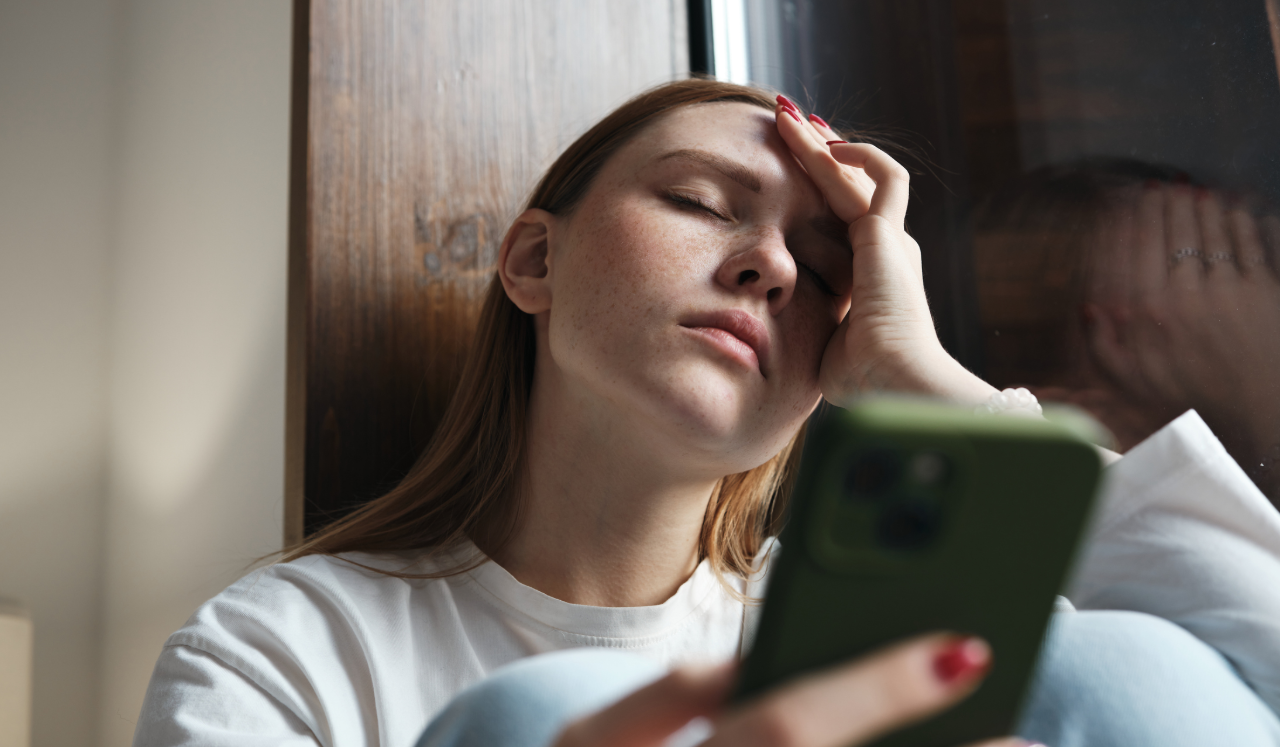
Many of us have done it: You pick up your phone to check the weather, respond to a text or glance at social media, and 30 minutes later you're still scrolling through headlines, videos and posts.
What starts as a quick check-in can quickly turn into doomscrolling, the habit of consuming an endless stream of information, often centered on negative, stressful or sensationalized content. While staying informed is important, constantly scrolling can take a toll on both your mental health and your sleep.
According to peer-reviewed research, excessive social media use has been linked to increased symptoms of anxiety, depression and sleep disturbances, particularly when use occurs too close to bedtime.
Gabrielle Hargrove, LPC, a behavioral health clinician affiliated with Memorial Hermann, says the combination of easy access to information and the way social media platforms are designed can make doomscrolling difficult to resist.
Why Doomscrolling Is So Hard to Stop
Social media was once a place to share vacation photos, connect with friends and keep up with family. Today, it has evolved into a constant source of news, entertainment and information. “Social media is so addicting because you can pick up your phone and instantly have news or celebrity gossip,” Hargrove says. “You're able to get in people's business, and you're getting things a lot quicker than in the days you had to wait for the national news or “Entertainment Tonight” to come on at night.”
Social media platforms are designed to keep users engaged. Each swipe, click or refresh offers the possibility of discovering something new, whether that's breaking news, a friend's update or a viral video. This unpredictable reward system is often compared to a slot machine because users never know what they'll see next. “The problem is where does it end? There is no bottom to a social media feed; if you get to ‘the end,’ it just refreshes,” Hargrove says. “We have the problem of nonstop information.”
At the same time, many people have grown accustomed to reaching for their phones whenever there is a moment of downtime. Instead of just waiting in line, sitting quietly or simply being bored, many people fill those moments by scrolling.
The Impact on Anxiety and the Nervous System
While doomscrolling may feel harmless, it can gradually shape how we think and feel throughout the day. “If you're doing something constantly, you're creating a habit,” Hargrove says.
It may be time to reassess your habits if you experience:
- Difficulty falling asleep
- Feeling anxious after using social media
- The need to constantly check your phone
- Trouble concentrating at work or school
- Feeling overwhelmed by current events
- The tendency to reach for your phone during every quiet moment
- Losing track of time while scrolling
The brain reinforces this doomscrolling behavior through dopamine, a neurotransmitter associated with pleasure and reward. The more often people reach for their phones, the more automatic the behavior becomes. Over time, those habits can expose users to a steady stream of stressful content.
“Social media is set up to take us down rabbit holes,” Hargrove says. “And I think that's the addictive part: As humans, we have a need to know, and with social media, it's easy to satisfy the need because it's instantly there, always waiting with another series of stories for us.”
How Doomscrolling Can Affect Sleep
The effects of doomscrolling are often most noticeable at night. Many people scroll before bed to relax, but consuming stressful information can have the opposite effect. “Seeing something negative, scary or stressful before you go to bed causes heightened anxiety,” Hargrove says.
Hargrove notes that social media leaves “breadcrumbs” in our heads, often leaving people thinking about what they have seen long after they put their phones down. “Instead of winding down, the brain remains focused on potential threats, unanswered questions or troubling headlines.”
According to Hargrove, these breadcrumbs can come in many forms:
- A disturbing news story
- A heated political debate
- A social media poll
- A post waiting for likes or comments
- An unresolved conversation
Doomscrolling before bed can interfere with sleep quality and make it harder to fall asleep, especially when the content is emotionally stimulating. “If you're noticing disruptions to your sleep or experiencing strong emotions before bed, it’s time for a change,” Hargrove advises.
How To Break the Doomscrolling Habit
Breaking the cycle does not necessarily mean abandoning social media altogether. Instead, Hargrove recommends setting intentional boundaries that give your nervous system a chance to rest.
Create a Morning Buffer
One of her strongest recommendations is avoiding social media immediately after waking up. “Don't wake up in the morning and touch your phone,” Hargrove says. “If you immediately check your feed, that moment of peace you had when you first woke up is replaced with the junk that social media dumps on you,” she says.
Set Limits and Stick to Them
Many phones and apps allow users to set daily screen time limits, but Hargrove says you must be disciplined enough to put down the phone when your time on social media is up. She recommends choosing a realistic limit and honoring it rather than repeatedly clicking ignore.
Schedule Your Social Media Time
Rather than checking social media throughout the day, Hargrove says to be intentional about your social media use and to schedule time to scroll. For example, you might allow yourself time during lunch or a short period in the evening.
Turn Off Notifications
Notifications are designed to pull users back into apps. Stop this temptation by disabling nonessential notifications that tempt you to constantly check your phone.
Move Your Phone Away from Your Bed
Environmental changes can make a big difference. To support new habits, Hargrove advises against charging your phone next to your bed or using it as your morning alarm. Charging it at an outlet across the room and using a traditional alarm clock can help reduce bedtime scrolling.
Try a No-Screen Day
Hargrove also encourages stepping away from social media altogether for a day or weekend. “Take note of how that time off felt,” she says. “Did you feel like you were more attentive? Happier?”
Many people find they are more present with family, friends and activities when they are not constantly checking their phones.
Reset Your Nervous System
When stress starts to build, Hargrove recommends these grounding techniques:
- Deep breathing
- Guided meditation
- Relaxing music
- Mindfulness exercises
- Spending time away from screens
“Resetting your nervous system,” she says, “means taking time to unplug from everything and take a step back.”
Giving Your Brain a Break
Social media is likely here to stay, and for many people it serves useful purposes. The challenge is learning when to step away. “Your body needs rest from social media,” Hargrove says. “Do not forget that you need time away from the stress of social media so you can be present with your friends and family and to give your mind and body time to unwind.”
Creating healthy boundaries around technology can help improve focus, reduce anxiety and support better sleep. Sometimes, the most important update is giving yourself permission to disconnect.

