 When Armando Rodriguez was diagnosed with stage II tonsil cancer, he turned to the Memorial Hermann for comprehensive care. From advanced cancer treatment at Memorial Hermann Cancer Center-Texas Medical Center to specialized swallowing and rehabilitation therapy at TIRR Memorial Hermann Outpatient Rehabilitation-Greater Heights, a coordinated team helped him navigate every stage of treatment and recovery, with the goal of restoring both his health and quality of life.
When Armando Rodriguez realized that it hurt to swallow, he thought it was most likely an abscessed tooth, nothing a trip to the dentist couldn’t fix. But when Armando’s dentist looked inside his mouth, an entirely different scenario began to unfold, one that Armando was not prepared for. “My dentist told me that it was a spot on my tonsil that was causing me discomfort, and that it was probably cancerous,” said Armando.
Armando’s next stop was an urgent care center, which strongly urged him to see an ear, nose and throat (ENT) specialist. A biopsy would later reveal that Armando had stage II squamous cell carcinoma (SCC) of the tonsil, a type of head and neck cancer that develops in the thin, flat squamous cells lining the tissues of the throat, tonsils and mouth.
Tonsillar squamous cell carcinoma can be particularly aggressive if not diagnosed and treated early, as the cancer can spread to nearby lymph nodes and surrounding tissues. Early detection and coordinated treatment are critical to improving outcomes and preserving important functions such as speech and swallowing.
Treating Stage II Tonsil Cancer at Memorial Hermann Cancer Center
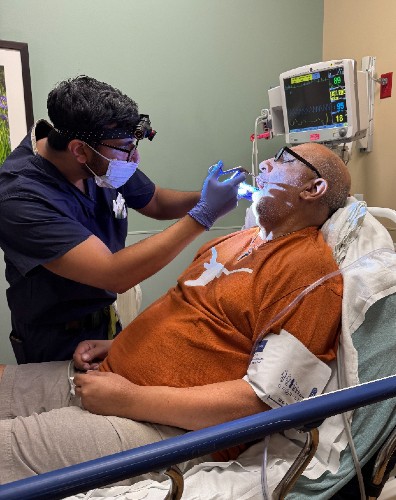 Armando’s ENT quickly referred him to Memorial Hermann Cancer Center-Texas Medical Center, where, he would undergo 35 rounds of radiation and seven chemotherapy treatments.
His care was overseen by Syed Jafri, MD, professor of Oncology at McGovern Medical School at UTHealth Houston and an oncologist and hematologist affiliated with Memorial Hermann, alongside Mark Amsbaugh, MD, associate professor of Radiation Oncology at UTHealth Houston , and a radiation oncologist affiliated with Memorial Hermann.
For patients with stage II tonsillar squamous cell carcinoma, treatment often involves a combination of radiation therapy and chemotherapy to eliminate cancer cells while reducing the need for invasive surgery that could impact speaking or swallowing. In Armando’s case, his physicians determined that concurrent chemoradiation offered the best opportunity for cure while preserving his quality of life.
“Chemotherapy helps sensitize cancer cells to radiation, making the treatment more effective,” explained Dr. Jafri. “The goal is not only to eradicate the cancer, but to do so in a way that allows patients to maintain long-term function and independence.”
“I felt like my throat was on fire during those treatments, but I never once regretted going to Memorial Hermann,” said Armando. “The team was fantastic, and they became like an extension of my family. They knew what they needed to do and were a great comfort to my wife and me throughout the ordeal.”
Armando, an English teacher in Galena Park ISD, was diagnosed in late August 2025, and worried he might miss significant time at school. While he did need to be absent occasionally, he continued to carry out his responsibilities despite the challenges.
Life on a Feeding Tube During Head and Neck Cancer Treatment
Being diagnosed late in the year also meant his treatments overlapped with the holidays. He was put on a percutaneous endoscopic gastrostomy (PEG) tube, a feeding tube placed through the skin into the stomach for nutritional and hydration support. Because of this, he had to miss meals at Thanksgiving, Christmas and his daughter’s birthday.
During that time, Armando worked closely with a nutritionist at Memorial Hermann Cancer Center-Texas Medical Center to see that he was getting the calories he needed to stay strong throughout treatment. “The worst part was not being able to partake in our family’s holiday dining traditions. But it was a small sacrifice given the larger picture,” he said.
Why Early Detection of Tonsil Cancer Improves Survival Outcomes
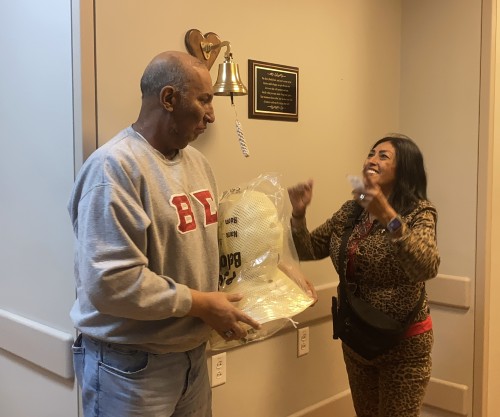 Recalling his journey, he is grateful that his cancer was caught in the early stages; otherwise, he might have had a much different outcome. His doctors concurred. “Like with other cancers, catching squamous cell cancers like Armando’s early makes them much more likely to be cured than cancers found at a later stage,” said Dr. Jafri. “When SCC is diagnosed before it has spread extensively to lymph nodes or distant organs, treatment is typically more effective and long-term outcomes are significantly better.”
Dr. Amsbaugh, who oversaw Armando’s radiation, said the treatment regimen was effective because Armando’s cancer was caught at an early stage. “Radiation therapy allowed us to target the cancer precisely while preserving critical structures involved in swallowing and speech,” he said. “Our goal was not only to treat the cancer, but to help Armando maintain his quality of life.”
Dr. Amsbaugh noted that modern radiation oncology techniques allow physicians to deliver highly targeted treatment while minimizing damage to surrounding healthy tissues. This enhanced precision is especially important in head and neck cancers, where treatment can significantly affect speaking, swallowing, nutrition and overall quality of life.
Speech Therapy and Swallowing Rehabilitation After Head and Neck Cancer Treatment
Armando successfully completed his radiation and manual lymphatic therapy, which removes excess fluid from tissues and filters waste and toxins. He was also treated for dysphagia, or difficulty swallowing.
After radiation, Armando was referred to TIRR Memorial Hermann Outpatient Rehabilitation - Greater Heights, where he worked with Lindsey Duckworth, MA, CCC-SLP, a speech-language pathologist and head-and-neck lymphedema-certified specialist. “Radiation for head and neck cancers can cause lasting effects on swallowing, sometimes years after treatment, making early monitoring and intervention critical for patients like Armando,” said Lindsey.
Head and neck cancer rehabilitation is a highly specialized area of therapy that focuses on restoring swallowing, speech, nutrition, mobility and quality of life following aggressive cancer treatment. At TIRR Memorial Hermann, rehabilitation specialists work closely with patients’ oncology teams to help manage both the immediate and long-term side effects of treatment.
When Armando arrived at TIRR Memorial Hermann, he was experiencing throat and tongue pain, severe dry mouth and thick mucus—all side effects of his cancer treatment. Over the course of two months, Lindsey worked with him on targeted exercises and strategies aimed at one central goal: weaning him off the feeding tube and getting him to eat and drink again.
His rehabilitation program included swallowing exercises, compensatory swallowing strategies, therapeutic stretches, lymphatic therapy techniques and ongoing monitoring designed to strengthen weakened muscles and reduce the risk of long-term swallowing dysfunction or aspiration.
“Being able to eat and drink normally is more than just nutrition and hydration,” said Lindsey. “When you can eat and drink, it impacts you mentally, socially and emotionally, so we wanted to help Armando reclaim that part of his life that is so central to his daily routine and social connections. It was a joy to walk alongside him and help him do so.”
Lindsey said one of the most rewarding moments in Armando’s recovery was watching him gradually transition away from tube feeding and return to oral intake safely and confidently.
“For many head and neck cancer patients, swallowing can become one of the most difficult and frustrating parts of recovery,” she said. “Helping patients regain that independence can have an enormous impact on both their physical and emotional well-being.”
Life After Tonsil Cancer: Recovery, Follow-Up Care and Moving Forward
Now, with ongoing follow-up visits and annual scans, Armando is focused on staying healthy, staying present and moving forward one day at a time.
Reflecting on his journey, he’s glad he didn’t brush off his symptoms and he encourages others not to do the same. “If something feels off, and it doesn’t go away, be proactive and get it checked. That one step changed everything for me,” he said.

Nationally Ranked Rehabilitation
For the 37th consecutive year, TIRR Memorial Hermann is recognized as the best rehabilitation hospital in Texas and No. 4 in the nation according to U.S. News and World Report's "Best Rehabilitation Hospitals" in America.
Learn more about TIRR Memorial Hermann rankingsContact Us
If you have questions or are looking for more information, please complete the form below and we will contact you.