It was a quiet Saturday night in August with dinner in front of the TV after a long day working in the yard. Michelle had been craving M&M’s candy and went looking for them after dinner. When she asked her husband Ken where they were, the words didn’t come out right.
He looked at her, confused, and told her to stop talking like that. She tried again. Still wrong. “I can’t help it,” she managed, but even that didn’t sound like her.
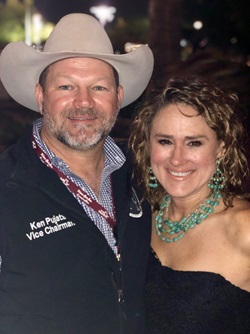
 Ken could already see the droop on one side of her face. He reached for his phone and video-called their daughter, a school nurse. “Dad, this is real,” she said. “Call 911.”
Ken’s father had died from a stroke, and in that moment, the memory came rushing back.
When Michelle arrived at the emergency room, the team moved with urgency. Imaging revealed a brain bleed, and she was monitored closely through the night. At 4 a.m., the surgeon outlined the possibilities. Because Michelle couldn’t remain still for an angiogram due to her restless legs, the team made the decision to intubate her. The angiogram confirmed what they feared, surgery was necessary.
Michelle underwent emergency brain surgery. As she was taken back, their daughter held Ken’s hand and reassured him, “Dad, it’s okay. She’s in good hands.”
The days that followed were anything but linear. By Tuesday, Michelle was walking stairs. By Wednesday, her sodium levels dropped, and she temporarily lost the ability to swallow. Then, slowly, she stabilized. On Friday, Ken drove her himself to TIRR Memorial Hermann to begin the next phase of her recovery.
While there, new information shifted everything. A physician arrived with the results of her surgical pathology: the brain bleed had a cause. Cancer cells originating in her gastrointestinal tract had traveled to her brain.
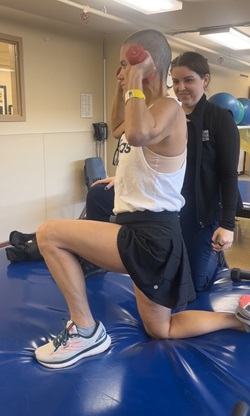
 The mission changed instantly. The TIRR Memorial Hermann team refocused their work, building Michelle back physically, mentally and cognitively so she could face whatever cancer treatment came next. Therapy became deeply personal, grounded in what mattered most to her: cooking, gardening, holding her granddaughter and refinishing furniture. Her neuropsychologist pushed her daily, becoming, in Michelle’s words, her “biggest cheerleader.”
Michelle graduated from outpatient therapy in November. That same evening, she had her first seizure. It was a hard pause on what should have been a celebratory day, but she came through it, her physician adjusted her medications and she kept moving forward.
Today, Michelle is back—back on her Rodeo committees, back at her workbench and back in the arms of her family. She still keeps seedlings from the TIRR Memorial Hermann garden, tending to them with intention, a quiet reminder that recovery—like growth—is something you nurture every single day.