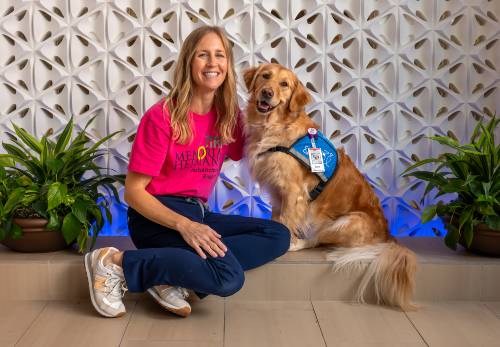
 Could a dog be more than a patient's best friend during rehabilitation? New research suggests a trained facility dog may also be a meaningful part of the recovery process.
Tara Haas, MS, OTR, TIRR Memorial Hermann’s Facility Dog Program Coordinator and handler of Annie, is an author of a newly published study examining the association between canine-assisted intervention and functional independence among patients receiving inpatient rehabilitation.
The study examined 1,619 adult inpatient rehabilitation patients, including 269 who participated in at least one therapy session involving a trained facility dog. Researchers found that patients exposed to canine-assisted intervention experienced greater improvement in overall functional independence from admission to discharge compared with those who did not participate in canine-assisted intervention.
Patients who received canine-assisted intervention had an average 2.4 point greater improvement in their composite functional independence score. The study also found that among patients who participated in canine-assisted intervention, greater cumulative exposure to the facility dog was associated with progressively greater improvement in functional independence.
While the findings are encouraging, researchers emphasize that the study demonstrates an association, not proof that canine-assisted intervention causes better recovery.
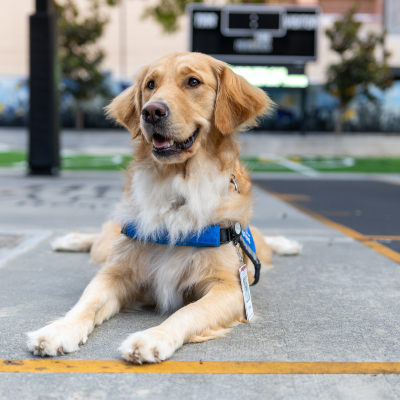 At TIRR Memorial Hermann, Haas sees firsthand how specially trained facility dogs can become part of a patient's rehabilitation experience.
For example, Annie can participate in therapy sessions and respond to task-specific cues designed to help patients work toward individualized goals.
"We see such wonderful responses when the dogs are present. Folks might go from standing maybe thirty seconds to then all of a sudden they're standing at the mat working on playing a game with our dogs or brushing them and the next thing you know they've broken standing records,” Haas said.
TIRR Memorial Hermann is also home to Pilot, another specially trained facility dog who works with handler Renee Lee. The dogs work alongside physical, occupational, speech and other rehabilitation professionals, helping patients stay engaged and motivated as they work toward functional goals.
For patients, that can mean turning a challenging therapy exercise into something a little more engaging, whether that involves reaching, moving, walking or completing another task necessary for greater independence.
The new research offers a scientific look at something rehabilitation teams like Haas have seen in practice: the connection between a patient, a specially trained dog and the rehabilitation team may be about more than comfort, it may also help support functional recovery.
Learn about media opportunities and request a media package »