 Through a comprehensive bariatric surgery program at Memorial Hermann Surgical Specialists & Weight Loss Solutions, Marilyn Rosales achieved significant weight loss, improved her health and fertility, and built the family she once thought was out of reach.
For much of her life, Marilyn Rosales, now 35, carried more than excess weight. She was filled with uncertainty about her health, her future and whether she would ever become a mother.
“I was told there was a high probability I would never conceive because of my weight,” she said. “It was soul crushing.”
Today, she and her husband, Antonio, 39, are chasing their 1-year-old daughter, Shiloh Neriah, around their home and in playgrounds in Kingwood, Texas. Their healthy baby girl was born on March 8, 2025, at Memorial Hermann Greater Heights Hospital in Houston, a milestone made possible after undergoing bariatric surgery at Memorial Hermann Surgical Specialists & Weight Loss Solutions.
Marilyn’s Lifelong Struggle With Obesity, Chronic Conditions and Infertility
Marilyn’s weight had been a challenge since childhood. She is 5’6” tall. At her heaviest, she weighed between 365 and 370 pounds and lived with multiple related health conditions, including high blood pressure, prediabetes, sleep apnea and Polyendocrine metabolic ovarian syndrome (PMOS). PMOS is a hormonal disorder that can disrupt ovulation, making it harder to become pregnant. Obesity can also worsen hormonal imbalance and reduce egg quality.
By themselves, each of these conditions might have made it difficult for Marilyn to get pregnant. Having been diagnosed with all of them, she lost hope. She said her dream of being a mom felt like just that…a dream.
“I tried everything to lose weight so I could get healthy and be able to get pregnant,” she said. “Diets, intense workouts and every program I could find. I would lose weight, then gain it back.”
Once, she did lose a significant amount of weight and had a glimmer of hope. But then she suffered a serious back injury. Surgery left her on bed rest, and she regained the weight she had worked hard to lose.
At the same time, the message from clinicians remained consistent. “Everything came back to my weight,” she said. “No matter what I went to the doctor for, they told me that if I lost weight, I wouldn’t have the issue. It felt hopeless.”
A Multidisciplinary Approach to Obesity Treatment
 Marilyn’s experience changed when she connected with Tanyaradzwa M. Kajese, MD, an assistant professor of Surgery at McGovern Medical School at UTHealth Houston and a bariatric surgeon and obesity medicine specialist affiliated with Memorial Hermann Memorial City Medical Center in Houston.
From the first consultation with Dr. Kajese, Marilyn said the approach to her care felt different. “At first, I didn’t think surgery was for me, but I wanted to talk to somebody and get real information,” Marilyn said. “Dr. Kajese was open, honest and straightforward. She spoke to me like I’m a human being.”
Comprehensive, Medically Supervised Weight Loss Program
That interaction reflects the structure of Memorial Hermann Surgical Specialists & Weight Loss Solutions, a comprehensive, medically supervised weight loss program offering advanced bariatric procedures and long-term support. Care begins with consultation and extends through decision-making, surgery and long-term follow-up. Patients are evaluated by a multidisciplinary team that may include a surgeon, physician, dietitian and psychologist.
Dr. Kajese has spent a decade treating obesity as a chronic medical condition, not a personal failure. Her approach centers on individualized care. “One treatment modality is not right for everybody,” Dr. Kajese said. “Weight loss is not a one-size-fits-all journey.”
At Memorial Hermann Surgical Specialists & Weight Loss Solutions, obesity is treated as a disease with biological drivers. Hormones, metabolism and chronic inflammation all play a role in obesity, she said. While noting diet and exercise remain important, Dr. Kajese said they are not enough for many patients.
“You cannot combat that biology with willpower alone,” Dr. Kajese said.
By the time she met with Dr. Kajese, Marilyn had decided to go forward with the bariatric surgery. She discussed it with Antonio, her sister and a couple of close friends and knew it was the right path for her.
Roux-en-Y Gastric Bypass: A Minimally Invasive Bariatric Procedure
Marilyn underwent a Roux-en-Y gastric bypass in April 2023. This advanced bariatric surgery, performed at Memorial Hermann, was done laparoscopically using small incisions and specialized instruments to support faster recovery and improved outcomes. In this surgery, a small stomach pouch is created and connected directly to the small intestine. This limits how much food can be eaten and reduces calorie absorption.
Over the next year and a half, Marilyn lost 150 pounds. She now weighs about 215 pounds. “Bariatric surgery changed everything for me,” she said. “I became more active. I started running 5Ks. I could finally live the way I wanted to.”
Her health improved across the board. She also reached personal milestones she once thought were out of reach, including fitting into a wedding dress she never imagined wearing. Marilyn and Antonio married in April 2024. They began trying to conceive and she became pregnant within three months. The pregnancy progressed without complications. “My doctor said it was a surprisingly very healthy pregnancy with all of my prior health issues considered,” Marilyn said.
She delivered Shiloh at 39 weeks at Memorial Hermann Greater Heights. Her daughter was born healthy, weighing 6 pounds, 9 ounces.
How Bariatric Surgery Can Improve Fertility and Pregnancy Outcomes
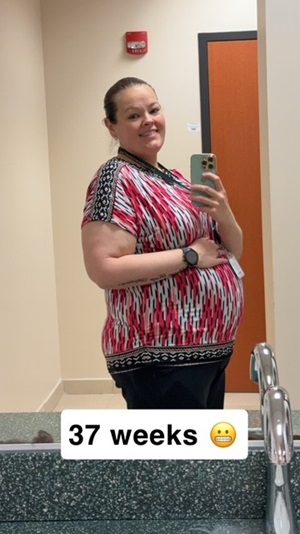 For many patients, the connection between weight and fertility is not clear. Obesity contributes to hormonal disruption and chronic inflammation, both of which can impair fertility. It can also increase risks during pregnancy. “When you treat obesity, you improve fertility,” Dr. Kajese said. “It’s not just about getting pregnant. It’s about having the healthiest pregnancy possible.”
Some patients pursue multiple rounds of fertility treatments without addressing underlying metabolic health. In certain cases, treating obesity first can be a more effective and lower-risk path. “If you’re not treating the disease, you’re fighting an uphill battle,” she said.
Marilyn’s story reflects more than weight loss. It shows what can happen when a comprehensive care team guides a patient through the full process, from consultation to long-term follow-up, with treatment tailored to the individual. “If you have the support to make the choice, it’s 100% worth it,” Marilyn said. “I believe I would never have my daughter if I hadn’t chosen the bypass.”
This Mother’s Day, that outcome stands as proof of what is possible when the right care meets the right patient at the right time.
Advanced Weight Loss Treatment Options
At Memorial Hermann, treatment plans may include lifestyle changes, medications, surgery or a combination of all three. The bariatric program offers a full spectrum of evidence-based obesity treatments, including minimally invasive bariatric surgery and medical weight management.
Weight loss medications, including injectable therapies that regulate appetite and blood sugar, can be effective for some patients, particularly those with a lower body mass index, or BMI. BMI is a measure that estimates body fat based on height and weight.
However, these medications often require long-term use and may not be sufficient for patients with more severe obesity. “For patients with higher BMI, surgery may be a more effective tool,” Dr. Kajese said.
Dr. Kajese, who is also the president of the Texas Association for Bariatric Surgery, emphasizes the importance of access to all options and informed decision-making. “You want a clinician who can offer the full range of treatments and help you decide what makes sense for you,” she said.
And, Dr. Kajese added that patients should choose a program that offers continuity of care. Providing the highest level of follow-up support is central to long-term success for bariatric patients.
Take the Next Step Toward Better Health
For more information about bariatric surgery and weight loss services at Memorial Hermann Surgical Specialists & Weight Loss Solutions, click here or connect with a specialist to discuss your options.